Helping Veterinary Teams Guide Better Client Decision-Making
BETTER GUIDANCE. BETTER DECISIONS. BETTER WELFARE.
The Most Important Medical Decisions Don't Happen in the Exam Room.
Every day, veterinarians diagnose disease, prescribe treatment, and make recommendations.
Then clients go home.
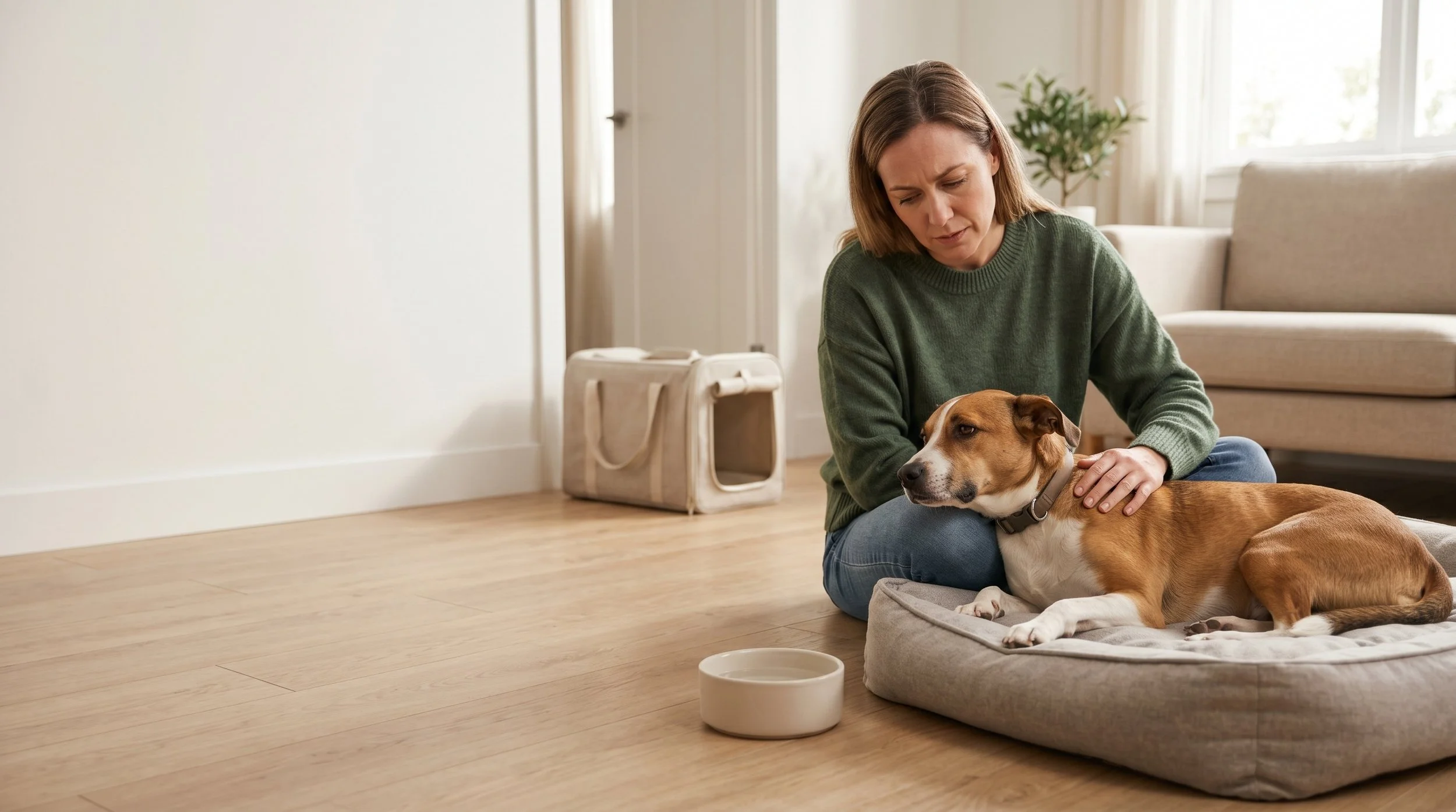
They become the primary observer, caregiver, and decision-maker.
They're expected to recognize meaningful change, monitor treatment response, assess quality of life, and know when to call.
Yet neither the client nor the veterinarian has been given a practical framework for navigating that journey together.
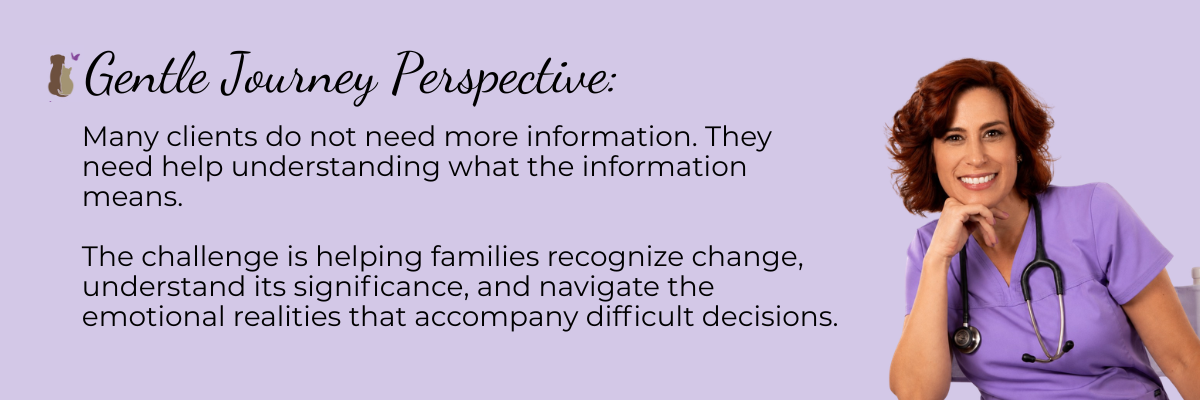
Clients don't simply need more information.
They need guidance that helps them recognize meaningful change and make good medical decisions in a sea of emotions.
RESOURCE HUB
For Veterinary Teams
The Gentle Journey Method™ for Veterinary Teams
People Love Their Pets. So Why Do So Many Pets Still Experience Unnecessary Suffering?
I don't believe it's because families don't care.
I don't believe it's because veterinarians don't care.
I believe it's because we've become exceptionally good at diagnosing disease, but we've never built an equally effective framework for helping families navigate progressive disease after they leave the clinic.
Most clients leave with:
A diagnosis.
A treatment plan.
A quality-of-life scale.
"Call us when you're ready."
Those are valuable tools.
But they aren't a system.
They don't teach clients how to recognize meaningful decline.
They don't explain how progressive disease unfolds.
They don't prepare families for the emotional conflict that accompanies difficult decisions.
And they don't provide veterinary teams with an efficient way to continue guiding clients between appointments.
Recognition Changes Everything
After more than twenty years of providing in-home euthanasia, one observation fundamentally changed the way I think about veterinary medicine.
Families often tell me,
"It happened all of a sudden."
But the disease rarely did.
Recognition did.
By the time many families recognize how much their pet has declined, meaningful suffering has often been progressing for weeks, months, or even years.
Recognition creates opportunities for:
Better conversations.
Better monitoring.
Better treatment decisions.
Better preparation.
Better patient welfare.
Recognition isn't simply an end-of-life issue.
It's the foundation of better medicine.
The Gentle Journey Method™
For more than twenty years, I've been trying to answer one question:
How do we help loving families protect their pet's welfare when love, hope, guilt, and grief make it so difficult to see the journey clearly?
I didn't set out to build a program.
I simply kept asking myself after every difficult case,
"How could I have helped this family sooner?"
Every difficult case taught me something.
Every conversation revealed another barrier.
Every barrier inspired another idea.
Over time, those ideas became conversations.
Those conversations became tools.
Those tools became a system.
That system became the Gentle Journey Method™.
It isn't simply a collection of resources.
It's a practical framework that helps veterinary teams guide clients through progressive disease with greater confidence, consistency, and efficiency.
Most importantly, it extends your influence beyond the appointment—without extending your day.
Clients don't experience their pet's journey in a series of appointments.
They experience it every day at home.
Experience the Philosophy
The Gentle Journey Resource Library is your first opportunity to experience the philosophy behind the Gentle Journey Method™.
It isn't the complete Method.
It's a collection of practical resources you can begin using with clients today.
Use it with:
Healthy senior wellness visits.
New chronic disease diagnoses.
Cancer diagnoses.
Mobility concerns.
Quality-of-life discussions.
Hospice and palliative care.
End-of-life planning.
The goal isn't to wait until families are in crisis.
It's to begin guiding them long before they need to make the hardest decisions.
Clients who receive support earlier often arrive better prepared, ask better questions, and become stronger partners in their pet's care.
Help Shape What's Next
Veterinary medicine transformed animal welfare when we changed the way we recognized pain.
I believe our next opportunity is to transform how we help families recognize decline.
The Gentle Journey Method™ Initiative brings together veterinary teams, industry partners, and educators who share that vision.
If you believe we can improve client decision-making, strengthen veterinary-client relationships, and better protect animal welfare, I'd love to invite you to be part of what's next.
Join The Gentle Journey Method™ Initiative
Receive updates, new resources, research announcements, and opportunities to participate.
Every Pet Deserves a Gentler Journey.
Helping families make better medical decisions isn't simply better client communication.
It's an opportunity to transform patient care.
And every veterinary team deserves a practical framework that helps families navigate life's most difficult decisions with greater confidence, clarity, and compassion.